Behind every seamless Winter Olympics performance stood a team that never won a medal. Their quiet resilience is the lesson every organisation needs.

They Never Won a Medal—But They’re the Most Resilient Team at the Winter Olympics

resilient team no medal

By Hwee Ching Ho

Director, Kaleidoskope Pte Ltd

When we think about resilience at the Milan-Cortina Winter Olympics, we think about athletes.

We picture Ilia Malinin, the “Quad God”, standing still at the end of the rink before launching into another quadruple jump.

We remember Alysa Liu, skating with composure beyond her years, performing with freedom rather than fear.

We see Eileen Gu at the lip of the halfpipe, committing fully to amplitude and rotation.

We recall the United States women’s national ice hockey team forcing overtime in a gold medal final — holding structure when fatigue could easily have fractured belief.

These are the moments that dominate the replays. The jump that lands. The trick that sticks. The goal that seals the win.

Visible resilience. Dramatic. Concentrated. Measurable.

But that’s only one layer of resilience at the Games.

The Team Without a Podium

Behind every performance in Milan-Cortina stood another team.

Thousands of volunteers — moving quietly between venues, transport routes and accreditation desks. Adjusting when weather shifted schedules. Redirecting spectators when access points changed. Calming athletes when equipment was delayed.

They did not wear bibs. They did not chase times.

But when friction appeared, they absorbed it. When confusion rose, they steadied it. When plans shifted, they recalibrated.

The Games looked seamless because someone was constantly smoothing the edges.

That is team resilience most organisations rarely notice. It is not spectacular. It does not trend on social media. It does not receive medals.

But without it, performance collapses.

Resilience Is Not Only Heroic — It Is Structural

In corporate life, we often equate resilience with toughness. Employees are encouraged to push harder, work longer, and deliver under pressure.

But the Olympic volunteers demonstrate something different.

Resilience is not brute endurance. It is system integrity under strain.

What does this mean? It is the ability of a team to maintain stability when volatility increases.

Every organisation has its equivalent of Olympic volunteers. They are not in the spotlight. But they prevent collapse. They hold processes together during change. They absorb last-minute pivots. They translate strategy into operational reality.

When transformation accelerates, markets fluctuate, or growth stretches capacity, these system stabilisers carry disproportionate strain.

But if they are unsupported, resilience in the workplace quietly erodes.

Not in one dramatic failure, rather in fatigue, disengagement, or brittleness.

This is why building resilient teams is not optional in today’s environment. It is foundational to sustainable performance.

High performance culture cannot be built solely on star performers. It must be built on structural steadiness — on teams that can flex without fracturing.

What Milan-Cortina Demonstrates About Resilience

The Winter Olympics show us two kinds of resilience: The visible kind — athletes landing impossible jumps under scrutiny. And the invisible kind — people ensuring the conditions remain playable.

High performance is inspiring, to be sure. But sustainable performance depends on structure.

The question for leaders is not only: Who are our stars?

Rather, it is: Who is holding the system steady? Are we building resilience into the fabric of the team not just into individuals? 

Because resilience in the workplace is rarely about heroic recovery. It is about everyday reliability. It’s about: 

  • Clear roles when pressure spikes.
  • Psychological safety so concerns surface early before they metastasise into crises.
  • Communication habits that prevent fragmentation when tension rises.

When those foundations are absent, even talented teams become brittle. When they are present, teams can absorb volatility without losing cohesion.

Resilience as Design, Not Accident

Too often, organisations assume resilience will emerge organically. As such, they hire capable people. They set ambitious targets. They reward results.

And they hope resilience will follow.

But hope is not a strategy.

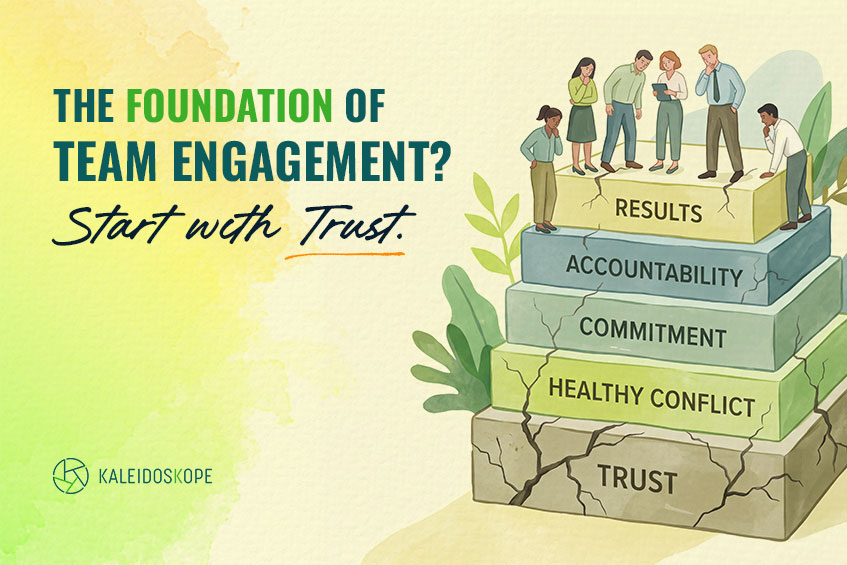
Team resilience is built deliberately. It is cultivated through clarity, structure, and shared norms that hold under stress.

At Kaleidoskope, we work with organisations to strengthen resilience at the collective level — not by pushing people to “be tougher”, but by equipping teams to:

  • Clarify roles and decision-making under pressure.
  • Build psychological safety so tension is surfaced early.
  • Develop communication habits that prevent fragmentation.
  • Strengthen alignment so execution remains coherent even when plans shift.

This is how building resilient teams moves from rhetoric to reality.

Resilience becomes embedded in how meetings are run, how decisions are made, and how disagreements are handled.

Over time, this shapes a high performance culture that is both ambitious and humane.

One that protects team wellbeing while sustaining results.

The Measure of Endurance

Olympic medals measure moments, while organisational resilience measures endurance.

It measures whether your team can sustain clarity through a volatile quarter. Whether collaboration survives a restructuring. Whether morale holds through uncertainty.

Often, the most resilient teams are the ones no one sees — until the system is tested.

The question is whether yours was built by accident.

Or by design.

If you’re looking to move beyond surface-level resilience — beyond motivational slogans and reactive firefighting — and instead build a culture where resilience is embedded into how your teams communicate, decide, and adapt, we’d welcome a conversation.

If you are ready to build resilient teams intentionally, we’d love to explore how this journey can be tailored for your organisation. Speak to us today about building your team resilience.

Related Blogs

If Feedback Only Happens Once a Year, It’s Too Late

If Feedback Only Happens Once a Year, It’s Too Late

When feedback is saved for once-a-year conversations, its power is often lost. By the time issues are raised, opportunities for learning and growth have already passed. This article explores how building a strong feedback culture through everyday conversations strengthens trust, development, and performance at work.

From Pressure to Power: Finding Strength in Stress

From Pressure to Power: Finding Strength in Stress

Stress doesn’t have to break you. This article explores how to reframe stress as a catalyst for growth, revealing proven techniques to stay resilient, focused, and in control when challenges arise.

When feedback is saved for once-a-year conversations, its power is often lost. By the time issues are raised, opportunities for learning and growth have already passed. This article explores how building a strong feedback culture through everyday conversations strengthens trust, development, and performance at work.

Finding Strength in Stress: Turning Pressure into Power

feedback culture

By Hwee Ching Ho

Director, Kaleidoskope Pte Ltd

This cartoon makes us laugh because it highlights a very real tension: most people want to give feedback well — but aren’t always sure how.

Too often, feedback is treated as something reserved for managers, formal reviews, or that one conversation at the end of the year. When that happens, the feedback culture becomes heavy, awkward, and performative — a high-stakes moment rather than a meaningful exchange. What should be a powerful developmental tool is reduced to a tick-box exercise, disconnected from day-to-day work and real learning.

By the time annual feedback rolls around, the moment for impact has often passed. The missed opportunity, the unresolved tension, the unspoken frustration — all of it has already shaped behaviour, relationships, and performance. 

At Kaleidoskope, we believe feedback works best when everyone is equipped to give it — intentionally, empathetically, and regularly — as part of everyday work for employee development. 

Feedback is not an annual event. It’s a habit.

Why annual feedback conversations fall short

Annual feedback conversations carry an unrealistic burden. They are expected to:

  • summarise a year’s worth of performance,
  • address challenges that may have surfaced months earlier,
  • motivate future growth,
  • and preserve trust and morale — all in one sitting.

It’s no wonder they feel uncomfortable for both managers and employees. Effective feedback in the workplace becomes a challenge.

When feedback is infrequent, it becomes emotionally charged. People feel judged rather than supported. Managers soften messages to avoid demotivation. Employees brace themselves defensively. The conversation becomes more about evaluation than development.

As one employee once put it:
“We only talk about my goals once a year — by then, it’s too late to change anything.”

This isn’t a capability issue. It’s a design issue.

Reframing feedback as a shared responsibility

Feedback works differently when it’s not owned solely by managers.

When employees are empowered to give feedback to peers, collaborators, and leaders:

  • conversations happen earlier, when they can still make a difference,
  • issues are addressed with care, not accumulated frustration,
  • trust builds through honesty, not silence.

Most importantly, feedback stops being about judging performance and starts being about helping one another succeed.

This shift from “managing performance” to developing people is subtle, but profound. It transforms feedback from something people endure into something they actively seek out and use.

What we learned from building a culture of meaningful conversations

Drawing from our work with a global organisation, we partnered closely with HR and leadership teams to reimagine how feedback was experienced across the employee lifecycle.

While formal performance processes were already in place, the quality and confidence of conversations varied widely. Feedback was happening, albeit inconsistently, cautiously, and often too late.

The aspiration was clear: to build a culture where conversations count, where feedback is frequent, human, and embedded into everyday work — not confined to an annual review cycle.

To support this shift, we designed a multi-month learning journey that equipped both managers and employees with the mindset, language, and practical tools to engage in feedback conversations that are clear, respectful, and growth-focused.

Not as a one-off intervention, but as a habit-building process to address development areas for employees.

The learning journey: practical and human

The learning journey was designed around a simple belief: feedback is a shared responsibility, not just a managerial task.

  1. Foundations of Intentional Feedback

    Participants explored what makes feedback genuinely useful — specific, balanced, and grounded in shared goals rather than judgment. Feedback was reframed as information for growth, not a verdict on worth or competence.

Simple, easy-to-apply frameworks helped normalise feedback as an everyday practice rather than a once-a-year event.

  1. Empathy & Courage in Feedback Conversations

    Giving feedback isn’t just about clarity, it’s also about emotional intelligence.

Participants learned how to:

  • express impact without blame,
  • manage their own emotional responses,
  • listen with curiosity rather than defensiveness.

By understanding why feedback conversations can feel threatening, people become better equipped to stay present, respectful, and constructive, even when conversations are difficult.

  1. Making Feedback Frequent and Consistent

    The final emphasis was on rhythm and habit.

Feedback was positioned as something that informs development throughout the year — in one-on-ones, project check-ins, and informal conversations — rather than something saved up for formal reviews.

When feedback becomes frequent, it also becomes lighter. There’s less pressure, less drama, and far more learning.

A healthier way to build performance

When employees know how to give feedback well, conversations happen naturally — earlier, more honestly, and with far less friction.

Performance improves not because people are more tightly managed, but because they feel:

  • supported rather than scrutinised,
  • seen rather than assessed,
  • trusted rather than controlled.

Feedback becomes a signal of care, not criticism.

And over time, this creates something far more powerful than a well-run performance cycle: a culture of trust, alignment, and continuous growth.

Moving forward, one conversation at a time

If you’re looking to move beyond tick-box feedback and build a culture where conversations genuinely count, we’d love to explore how this kind of learning journey can be tailored for your organisation.

Because feedback isn’t about pointing things out once a year —it’s about moving forward together, one conversation at a time.

Related Blogs

If Feedback Only Happens Once a Year, It’s Too Late

If Feedback Only Happens Once a Year, It’s Too Late

When feedback is saved for once-a-year conversations, its power is often lost. By the time issues are raised, opportunities for learning and growth have already passed. This article explores how building a strong feedback culture through everyday conversations strengthens trust, development, and performance at work.

From Pressure to Power: Finding Strength in Stress

From Pressure to Power: Finding Strength in Stress

Stress doesn’t have to break you. This article explores how to reframe stress as a catalyst for growth, revealing proven techniques to stay resilient, focused, and in control when challenges arise.

Stress doesn’t have to break you. This article explores how to reframe stress as a catalyst for growth, revealing proven techniques to stay resilient, focused, and in control when challenges arise.

Finding Strength in Stress: Turning Pressure into Power

From Pressure to Power: Finding Strength in Stress

By Hwee Ching Ho

Director, Kaleidoskope Pte Ltd

As the year draws to a close, many of us feel that familiar quickening — a mix of anticipation, fatigue, and reflection. There are projects to wrap up, performance reviews to complete, and plans to make for the year ahead. For some, it’s also a season filled with family gatherings, travel logistics, and a flurry of festive obligations.

Even with the best intentions, stress tends to find its way in. It creeps into our inboxes, our calendars, and sometimes, into our conversations.

But here’s the truth: not all stress is bad.

When understood and managed well, stress can actually be a powerful ally. It sharpens our focus, boosts motivation, and pushes us to grow beyond our comfort zones. The challenge lies in recognising when healthy pressure tips into unhealthy strain, and learning how to shift that balance with awareness and skill.

At Kaleidoskope, we see this every day in our leadership programmes. The leaders who thrive are not the ones who avoid stress, but those who have learned to harness it. 

What makes the real difference is resilience — the ability to recover, adapt, and turn pressure into progress.

The Hidden Upside of Stress

In conversations about stress management, the emphasis often falls on reducing stress — taking breaks, disconnecting, or saying no. These are important strategies, but they tell only half the story.

When we view stress through a different lens, it becomes an opportunity for transformation. The body’s natural stress response manifested by increased heart rate, sharper focus, heightened awareness is designed to prepare us for a challenge. In moderate doses, it fuels performance and creativity.

Think of a presenter before a big keynote. The slight edge of adrenaline isn’t a sign of weakness; it’s a sign of readiness. What matters is how we channel it. For instance, many leaders in Singapore embark on presentation skills training to transform that jittery, nervous feeling into energy and presence. When leaders learn to regulate their emotional and physiological responses, stress becomes a resource, not a roadblock.

The Role of Emotional Agility

The bridge between pressure and power is emotional agility — the ability to navigate our inner landscape with curiosity and composure, even when things get tough.

Emotional agility is what allows leaders to stay grounded amid chaos, to acknowledge difficult emotions without being ruled by them. It’s what helps a manager respond calmly when a project derails, a team member disappoints, or feedback stings.

Developing this inner flexibility doesn’t mean suppressing stress or discomfort. It means learning to notice and name what’s happening, such as feeling overwhelmed, and then choosing a conscious response. This simple act of naming creates a gap between stimulus and reaction, a moment of clarity where new choices can emerge.

At Kaleidoskope, we help leaders cultivate this skill through mindfulness-based practices, reflective exercises, and experiential learning. Over time, these practices strengthen the mental “muscle” of resilience, enabling leaders to lead with steadiness, compassion, and clarity under pressure.

Leadership and Resilience: A New Kind of Strength

Today’s world demands leaders who can stay centred in uncertainty, who can think clearly when others panic, and who can maintain empathy even in high-stakes moments. This is where leadership and resilience intersect.

Resilience isn’t about pushing harder or ignoring pain. It’s about recovery — the ability to recharge, reframe, and re-engage with purpose. In our sessions, we often remind participants that resilience is not a personality trait; it’s a set of habits and mindsets that anyone can develop.

Those habits might look like:

  • Pausing before reacting, especially when emotions run high.
  • Setting boundaries and allotting time for reflection and rest.
  • Reframing setbacks as opportunities to learn.
  • Connecting with purpose or remembering why we do what we do, even when the path gets tough.

These micro-habits add up. Over time, they transform how leaders show up for themselves, their teams, and organisations.

Turning Insight into Practice

Building resilience isn’t just a mindset shift; it’s a daily practice. Leaders who commit to developing self-awareness and emotional agility are better equipped to navigate complexity, uncertainty, and change. Not by controlling every outcome, but by cultivating inner stability.

In a world where rapid change is the only constant, stress management becomes a form of leadership. It’s no longer a personal wellness issue; it’s a professional capability that determines how effectively we can lead teams, handle conflict, and make sound decisions under pressure.

A Moment to Reflect

As the year winds down, take a moment to reflect:

  • What have been your biggest sources of stress this year?
  • Which challenges helped you grow the most?
  • And how might you approach stress differently in the year ahead?

Perhaps the goal isn’t to avoid pressure, but to learn to dance with it, to let it sharpen rather than shatter us. When we do, we don’t just manage stress; we transform it into strength.

Watch this video to see how we encourage our participants to rethink pressure.

At Kaleidoskope, we believe resilience is the leadership superpower of our time. Through our corporate training programmes, we help leaders cultivate the awareness, adaptability, and confidence to thrive in challenging times.

So as you prepare for the new year, remember: pressure is inevitable. But with the right tools, mindset, and support, it can become your greatest source of growth.

Learn how to thrive, not in spite of, but because of pressure through our leadership training programmes.

Related Blogs

If Feedback Only Happens Once a Year, It’s Too Late

If Feedback Only Happens Once a Year, It’s Too Late

When feedback is saved for once-a-year conversations, its power is often lost. By the time issues are raised, opportunities for learning and growth have already passed. This article explores how building a strong feedback culture through everyday conversations strengthens trust, development, and performance at work.

From Pressure to Power: Finding Strength in Stress

From Pressure to Power: Finding Strength in Stress

Stress doesn’t have to break you. This article explores how to reframe stress as a catalyst for growth, revealing proven techniques to stay resilient, focused, and in control when challenges arise.

A reflection on Kaleidoskope’s journey of resilience and renewal, and how those lessons now guide our Resilience Training for leaders and teams in Singapore.

Resilience and Renewal: The Kaleidoskope Story

kaleidoskope story of resilience

By Hwee Ching Ho

Director, Kaleidoskope Pte Ltd

Resilience in Our Business (and a funny story along the way)

When Kaleidoskope began in 2016, our vision was simple: to help leaders and organisations grow through meaningful learning experiences. We wanted to create spaces where people could pause, reflect, and reconnect with what truly matters, both in leadership and in life. Those early days were filled with the excitement of new beginnings. We were building momentum, finding our rhythm, and seeing the impact of our work take root in the leaders and teams we served.

And then, like so many others, we found ourselves in the middle of a storm no one had predicted.

When COVID-19 hit, everything changed overnight. The calendar that had once been filled with back-to-back workshops and corporate engagements suddenly went blank. Face-to-face sessions — the heart of our work — were no longer possible. Projects were paused. Travel was halted. Teams were scattered. It felt like the world had stopped spinning, and with it, the sense of certainty we had carefully built.

We had a choice: wait for things to return to “normal” or begin the difficult process of reimagining what our work could look like in a changed world.

That was the start of a journey that tested not only our creativity but our courage.

Learning to See Through the Chaos

The early months of the pandemic were filled with questions. How could we preserve the energy and connection that made our in-person workshops so impactful? How could we continue supporting leaders when everyone, ourselves included, was exhausted and uncertain?

We began experimenting with virtual learning. The first few attempts were, in hindsight, gloriously imperfect. But somewhere amid the technical glitches and awkward silences, we began to see something beautiful emerging — a different kind of connection.

In virtual spaces, we discovered how intimacy and authenticity could still flourish. Participants joined from their living rooms, kitchens, and home offices. We saw our colleagues in their own spaces, with lives, families, and worries much like our own. 

And of course, there were moments that reminded us not to take ourselves too seriously.

In one of our very first online sessions, a trainer wore a nude-coloured blouse. Halfway through, we received a private WhatsApp message from the client:

“Could you please ask your trainer to put on some clothes?”

Mortifying at the time, hilarious now. It was one of those moments that perfectly captured what resilience really feels like — messy, human, and sometimes, deeply funny. It was one of those bittersweet moments that reminded us to never lose our sense of humour.

Redefining What It Means to Be Resilient

We stumbled, adapted, and eventually found our stride again. Virtual learning became second nature. We reimagined how to design engagement, restructured programmes, and learned how to create energy through a screen. When the world slowly reopened, we returned to in-person sessions with a renewed sense of confidence — not because everything was the same again, but because we had grown through the uncertainty.

Through this experience, our understanding of resilience fundamentally changed.

Resilience, we learned, isn’t about “toughing it out” or soldiering on. It isn’t about endurance for endurance’s sake. True resilience is about flexibility — the capacity to bend without breaking, to adapt with grace, and to find meaning even in the uncomfortable moments. It’s about staying creative in the face of constraints and choosing to see challenges not as walls, but as doorways.

It’s also about humour — because sometimes, laughter really is the best form of resilience. That small, funny incident during one of our first virtual sessions became a story we still tell today. It reminds us that even when things go wrong, what matters most is how we respond — with curiosity, humility, and heart.

Bouncing Forward, Not Just Back

At Kaleidoskope, we often talk about resilience as “bouncing forward,” not merely “bouncing back.” The world doesn’t rewind after disruption; it moves on. And so must we.

Our resilience journey pushed us to explore new ways of learning and leading. We built more adaptive programmes and deepened our commitment to human-centred learning. We became more intentional about how we design spaces where leaders can show up fully, not as flawless decision-makers, but as whole, evolving individuals.

Every leadership programme we run and every learning journey we design carries traces of what we discovered in those uncertain years: that resilience is not something you teach once, but something you practise, live, and continually grow into.

Introducing Kaleidoskope’s Resilience Training

Because resilience has been such a defining part of our own story, we wanted to bring those lessons to others. That’s why we’ve launched our new Resilience Training, a programme designed to help leaders and organisations not only withstand disruption but grow through it.

Our approach blends reflection, practical tools, and experiential learning–guiding participants to recognise their patterns under pressure, shift their responses, and strengthen their capacity for adaptation. We explore questions such as:

  • How do leaders stay centred when the ground beneath them shifts?
  • What mindsets enable teams to turn setbacks into learning moments?
  • How can organisations embed resilience as part of their culture, and not just a crisis response?

Resilience, after all, isn’t something reserved for extraordinary times. It’s a daily discipline that allows us to navigate uncertainty with clarity and compassion.

This training draws on the same principles that carried Kaleidoskope through its own transformation: curiosity, courage, and connection. It’s not about theory; it’s about lived experience that builds the kind of inner and collective strength that allows individuals and teams to thrive even amid change.

A Final Reflection

Looking back, it’s clear that resilience has been the thread weaving together Kaleidoskope’s story — through every challenge, pivot, and renewal. The lessons we learned were often uncomfortable, occasionally funny, and always meaningful.

If there’s one takeaway from our journey, it’s this: resilience isn’t about never falling, rather it’s about learning how to stand up again, each time, a little wiser, a little lighter, and a lot more human.

We continue to carry that lesson forward into every workshop, every leadership programme, and every learning journey we design.

And so, as we step into our next chapter, we invite you to reflect on your own:

What’s one moment in your resilience journey that still makes you laugh today?

If your organisation is exploring ways to build lasting resilience — in leaders, teams, and culture — we’d love to have that conversation.

Strengthen your organisation from within by exploring our Resilience Training today.

Related Blogs

If Feedback Only Happens Once a Year, It’s Too Late

If Feedback Only Happens Once a Year, It’s Too Late

When feedback is saved for once-a-year conversations, its power is often lost. By the time issues are raised, opportunities for learning and growth have already passed. This article explores how building a strong feedback culture through everyday conversations strengthens trust, development, and performance at work.

From Pressure to Power: Finding Strength in Stress

From Pressure to Power: Finding Strength in Stress

Stress doesn’t have to break you. This article explores how to reframe stress as a catalyst for growth, revealing proven techniques to stay resilient, focused, and in control when challenges arise.

Traditional leadership rooted in command-and-control may steady teams in crisis—but without trust and inclusion, it often leaves organisations brittle.

“He Who Saves His Country Does Not Violate Any Law” — The Cautionary Tale of Command-and-Control Leadership

command-and-control leadership

“He Who Saves His Country Does Not Violate Any Law” — The Cautionary Tale of Command-and-Control Leadership

In times of upheaval, many gravitate toward leaders who project authority, clarity, and decisive action. Across geopolitics and within organisations, we see figures who adopt a command-and-control traditional leadership style: centralised, uncompromising, and at times authoritarian.

For many, this approach offers reassurance in chaos. 

When the world feels uncertain, a strong voice at the helm can provide comfort, even if only temporarily. Yet history shows us that while command-and-control can be essential during real crises, it often fails—or becomes dangerous—when misapplied.

The Allure of Absolute Control 

Franklin Delano Roosevelt (FDR) entered office in 1933 at the height of the Great Depression. The United States was reeling: millions unemployed, banks collapsing, and faith in government at an all-time low. 

Roosevelt’s style was decisive—he acted quickly with bold measures such as the New Deal—but his true genius lay in reassurance. Through his famous “fireside chats,” he spoke directly to the public, calming fears while explaining bold measures in plain, human terms. He commanded, yes, but he also built trust. People felt they were part of a collective recovery rather than subjects of his will.

Contrast this with Donald Trump, who often frames himself as a lone saviour confronting crises—some genuine, others amplified or even manufactured. His recent remark, “He who saves his country does not violate any law,” captures a mindset where the leader places themselves above norms or institutions, justifying extraordinary measures by invoking extraordinary danger. Here, authority risks becoming untethered from accountability, turning leadership into a tool for personal power rather than collective resilience.

The allure of absolute control, then, lies in its clarity. It cuts through noise and uncertainty with a single voice. But this clarity can be deceptive. Without checks, it risks suppressing diverse perspectives, narrowing solutions, and eroding trust in the very systems leaders are supposed to uphold.

Mirroring This in Corporate Organisations 

These dynamics are not confined to politics. In corporate organisations, command-and-control leadership can feel efficient, especially when crises loom. Yet sustained use of this style extracts a heavy price.

  • Innovation suffers when dissent is silenced. Employees, wary of challenging the leader, may withhold ideas that could drive growth or prevent failure.
  • Trust erodes when loyalty is demanded rather than earned. A culture of fear may ensure compliance, but it rarely sustains engagement or discretionary effort.
  • Resilience weakens when systems become overly dependent on one individual. Organisations, like nations, risk becoming locked in reactive cycles, unable to adapt when unexpected change arrives.

History again provides a counterexample in FDR. He faced not only the Depression but also the Second World War. His leadership combined decisiveness with reassurance —“the only thing we have to fear is fear itself.” He did more than steady nerves. The balance prevented paralysis and galvanised collective action. His authority built confidence rather than undermined it.  

Trump’s style, by contrast, often destabilises. By amplifying crises, he rallies followers in the short term, but risks leaving systems polarised, brittle, and mistrustful. In organisations, similar patterns emerge when leaders thrive on fire-fighting and drama but neglect to build sustainable cultures of trust and adaptability.

Lessons for Leaders 

A “my way or the highway” mindset may resolve immediate emergencies—but rarely sustains long-term success. In crises, clear direction and fast decisions are essential. And yet, leaders who endure know that authority must be paired with reassurance, inclusion, and humility.

Consider the following principles:

  • Invite shared ownership – Encourage diverse perspectives, even under pressure. This strengthens decision quality and builds resilience.
  • Explain the ‘why’ – Build trust through clarity and transparency. People can follow difficult decisions if they understand the reasoning behind them.
  • Empower teams within guardrails – Provide direction, but allow autonomy. Creativity flourishes when people feel safe to contribute.
  • Listen actively – Listening is not passive; it is a core leadership strength that fosters engagement and surfaces blind spots.
  • Balance decisiveness with humility – Great leaders know when to act firmly and when to adapt, recognising that strength lies in flexibility as much as control.

These lessons are not abstract ideals. They translate directly into the way leaders handle strategic shifts, culture change, and team dynamics. Leaders who embody them build organisations that thrive not only in crisis but also in continuity.

A Better Path Forward 

Enduring organisations are rarely built on one commanding voice. They flourish through collective intelligence—where ideas are tested, challenged, and refined. The most effective leaders distinguish between contexts: when decisive, centralised leadership is truly needed, and when reassurance, humility, and collaboration are the real answers.

At Kaleidoskope, we help leaders explore this balance. Through workshops such as Leading through Uncertainty, Influencing without Authority, Mindfulness in Leadership, and Impactful Communication, we equip individuals and organisations to wield authority when necessary while cultivating cultures that thrive long after the storm has passed.

The cautionary tale is clear. A leader can steady a team in crisis with authority, or destabilise it by amplifying fear. They can inspire confidence, or undermine trust by placing themselves above the system.

In business, as in politics, true leadership is not about who shouts the loudest. It is about who instils confidence, empowers others, and guides with clarity and trust.

Unlock your team’s potential with our corporate training programmes.

Related Blogs

If Feedback Only Happens Once a Year, It’s Too Late

If Feedback Only Happens Once a Year, It’s Too Late

When feedback is saved for once-a-year conversations, its power is often lost. By the time issues are raised, opportunities for learning and growth have already passed. This article explores how building a strong feedback culture through everyday conversations strengthens trust, development, and performance at work.

From Pressure to Power: Finding Strength in Stress

From Pressure to Power: Finding Strength in Stress

Stress doesn’t have to break you. This article explores how to reframe stress as a catalyst for growth, revealing proven techniques to stay resilient, focused, and in control when challenges arise.

Brown Bag Sessions by Kaleidoskope Singapore deliver practical, bite-sized learning that builds skills, sparks insight, and fits right into your team’s day. No prep, no disruption.

Bite-Sized Learning That Moves the Needle: A Smarter Way to Engage, Equip and Enable Teams

Bite-Sized Learning That Moves The Needle

Bite-Sized Learning That Moves the Needle: A Smarter Way to Engage, Equip and Enable Teams

By Hwee Ching Ho

Director, Kaleidoskope Pte Ltd


In today’s fast-moving environment, building competence, culture, and capability — and supporting ongoing professional development — can’t always wait for a two-day retreat or a six-month programme. Organisations are operating in increasingly dynamic, often unpredictable conditions. Priorities shift. Resources tighten. People are stretched. And yet, the need for meaningful learning has never been more urgent.

That’s why many of our clients are turning to us for Brown Bag Sessions — short, targeted learning conversations that fit seamlessly into the working rhythm of busy teams. These sessions are designed to spark insight, deepen connection, and build tangible skills — all within the space of a lunch break.

For companies investing in leadership training in Singapore, these sessions can complement existing programmes or serve as a practical entry point.

Meeting Teams Where They Are

Unlike traditional learning formats that require extended time away from work, Brown Bag Sessions are intentionally built for accessibility. Delivered in 45–60 minute blocks, they are easy to schedule, low on logistical demand, and high on relevance. This flexibility allows learning to happen in context — closer to the moment of need, embedded in the everyday flow of work.

At Kaleidoskope, we’ve helped executive teams, business units, and cross-functional groups build:

  • Clearer communication and feedback habits
  • Resilience in uncertainty
  • Influence and collaboration across silos
  • Creative thinking habits that unlock new solutions
  • Conditions for trusting and honest conversations across teams

Each Brown Bag Session is tailored to the unique challenges and aspirations of your people. Whether your team is wrestling with change fatigue, looking to deepen cross-functional trust, or strengthening its feedback culture, we meet you where you are — and move you forward.

Why Micro Matters

Micro-learning is not a trend; it’s a necessity. Attention spans are shorter, calendars are tighter, and competing priorities are the norm. In this reality, traditional learning formats often struggle to stick. By contrast, bite-sized learning creates just-in-time relevance — practical, targeted insights that people can apply immediately.

But make no mistake: these sessions may be short, but they go deep. Through carefully facilitated conversations, participants are invited to reflect, share, and experiment with new ways of thinking and behaving. The learning is experiential, not didactic. And because it’s linked to real work challenges, the insights are more likely to land, stick, and ripple outward.

Designed for Impact — Not Interruption

These 45–60 minute sessions are customised, practical, and designed to create immediate impact — without disrupting day-to-day operations. Whether you’re rolling out a culture shift, developing people leaders, or simply looking for a low-lift, high-return way to energise your teams, these sessions offer a scalable and effective solution. They support your people without placing additional demands on already full calendars or derailing the flow of their day.

And unlike many training programmes that require weeks of prep and hours of follow-up, Brown Bag Sessions are refreshingly simple to roll out. No pre-reading. No prerequisites. Just real-time, real-talk learning with skilled facilitators who know how to hold space, spark insight, and foster action.

Whether delivered as virtual training, hybrid learning, or in-person experiences, they allow leaders to bring learning into the room in a way that’s inclusive, accessible, and deeply relevant. You don’t need a training budget or a full-day offsite — just a pocket of time and a commitment to growth.

Why It Works

We’ve seen firsthand how these learning bursts can shift energy, language, and momentum in a team. Here’s why they’re so effective:

  • No preparation needed — just show up and join the conversation
  • Designed for scale — works across levels, functions, and regions
  • Practical and immediately applicable — not just theory, but usable insight
  • Engaging and relevant — every session is tailored to your real context
  • Flexible delivery — face-to-face, hybrid, or virtual learning 

In a time when many teams are feeling tired, fragmented, or simply out of sync, Brown Bag Sessions offer a re-energising jolt — a safe and stimulating space to reconnect with purpose, sharpen skills, and move the needle on what matters most.

As organisations seek agile and human-centred leadership training in Singapore, Brown Bag Sessions offer a high-impact, low-barrier starting point. Ultimately, these sessions are more than just quick wins. They form part of a broader shift toward a culture of continuous learning — where reflection, experimentation, and skill-building are woven into the rhythm of daily work. 

Ready to Explore?

We believe learning shouldn’t feel like another item on the to-do list. It should feel like an opportunity — to connect, to grow, and to think differently. Brown Bag Sessions make that possible.

So if you’re looking for a smart, scalable way to energise your teams, build capability, and embed learning into the flow of work — without the cost or complexity of traditional programmes — we’d love to help. Let’s explore how we can support your teams with learning that’s timely, practical, and purpose-built.


Related Blogs

If Feedback Only Happens Once a Year, It’s Too Late

If Feedback Only Happens Once a Year, It’s Too Late

When feedback is saved for once-a-year conversations, its power is often lost. By the time issues are raised, opportunities for learning and growth have already passed. This article explores how building a strong feedback culture through everyday conversations strengthens trust, development, and performance at work.

From Pressure to Power: Finding Strength in Stress

From Pressure to Power: Finding Strength in Stress

Stress doesn’t have to break you. This article explores how to reframe stress as a catalyst for growth, revealing proven techniques to stay resilient, focused, and in control when challenges arise.

AI is transforming business, but without ethical leadership, it can amplify bias and harm. This article urges leaders to ask the right questions before moving fast.

AI Is Changing Business: Are Your Leaders Ready?

AI in Leadership Training

“Working with leaders embracing AI, I see too many fall into the ‘AI Innovation Trap’: charging ahead without navigating the ethical minefields beneath. When ethics become an afterthought, you’re not innovating but automating your worst biases at scale. That’s why I challenge teams: Resist deployment pressure. Pause. Interrogate yourself, teams and AI vendors with the hard questions first. Because being first to market means nothing if you’re first to fail ethically. Let’s build AI that earns trust. It’s the only future worth creating.”

Gurpreet Bajaj Singh (GP),
Master Trainer and Facilitator at Kaleidoskope


In boardrooms around the world, artificial intelligence (AI) is no longer a hypothetical concept. It’s here—streamlining operations, accelerating insights, and transforming the way we engage with customers and employees. This seismic shift marks a new frontier for AI in business, promising unprecedented efficiency and innovation. But amid this excitement lies a sobering reality: AI is only as good—or as dangerous—as the values that guide it.

From hiring algorithms to performance scoring systems, AI is making decisions that affect people’s lives. These are not minor operational tweaks; they are profound interventions in the human experience of work. And yet, many organisations are charging ahead with implementation before asking the most important questions about AI ethics:

  • Is the data fair and representative?
  • Can we explain how our algorithms make decisions?
  • Who is accountable when AI goes wrong?

These aren’t just technical questions. They’re leadership questions. And the answers are shaping the future of work, trust, and organisational culture.


Beyond the Hype: Why Ethical Leadership Matters in an AI World

The temptation to embrace AI at speed is strong. Who doesn’t want faster decisions, better predictions, or hyper-personalised experiences? The competitive pressure to be at the forefront of AI in business can feel all-consuming.

But as AI becomes more embedded in business processes, leaders must confront an emerging truth: speed without ethics is a risk multiplier. Unchecked AI can replicate historical biases, damage trust with employees and customers, and expose organisations to regulatory and reputational fallout. A flawed algorithm doesn’t just make a mistake; it makes thousands of them in seconds, amplifying prejudice on an industrial scale. This is where the conversation about AI ethics moves from theoretical to critical.

Conversely, when applied responsibly, AI becomes a strategic advantage—enhancing fairness, transparency, and human decision-making. That’s where ethical leadership comes in. Leaders must understand AI not just as a tool, but as a force that can shift power, amplify inequities, and fundamentally reshape organisational culture. It requires a leadership cohort that is fluent not only in the language of technology but also in the language of morality and accountability. True innovation in AI in business is not just about what we can build, but what we should build.


Decoding AI Ethics in Business: A Leadership Dialogue for the Future

To help organisations navigate this complex space, we’ve designed a high-impact, interactive session:

Leader Talk Series – Decoding AI and Ethics in Business

This isn’t a technical workshop. It’s a mindset reset. We invite leaders to step into real-world scenarios, challenge their assumptions, and reflect on the values driving their organisation’s use of AI. Our goal is to cultivate a culture of ethical leadership that is robust enough to handle the challenges posed by modern AI in business.

The session is built around three key pillars:

  1. Understanding the Ethical Risks

Using live case studies, we explore how even well-intended AI can go off course. Think biased hiring tools, opaque customer profiling, and feedback loops that reinforce inequality. These examples serve as cautionary tales—and springboards for critical discussion. We delve into headlines and behind-the-scenes failures, translating abstract risks into tangible business consequences. This pillar is foundational to grasping the real-world implications of AI ethics.

  1. Building Ethical Awareness Through Experience

Participants don’t just learn about ethics—they feel the tension. Through ethical maze simulations and scenario-based decision-making challenges, leaders experience firsthand the grey areas where business goals collide with ethical dilemmas. This hands-on, experiential learning opens powerful conversations about responsibility, values, and long-term consequences. It forces a confrontation with ambiguity, training leaders to develop the moral muscle needed for effective ethical leadership in the age of AI.

  1. Creating a Culture of Accountability and Trust

Using reflection tools and group insights, we help participants assess their organisation’s AI readiness and identify cultural blind spots. More importantly, we equip them with the confidence to challenge questionable practices, ask better questions, and model transparent, values-led leadership in the age of automation. This final pillar moves from awareness to action, providing a framework for embedding AI ethics into the very fabric of the company culture.


The Future Belongs to Conscious Leaders

AI can drive efficiency. But only ethical leadership can ensure that it drives equity. Leaders must not only understand AI—they must be prepared to question it. They must be the voices that ask:

  • Is this fair?
  • Is this explainable?
  • Who benefits, and who is potentially harmed?

As more decisions become automated, leadership becomes less about having the answers and more about asking the right questions. This is the new mandate for leaders overseeing the integration of AI in business. The greatest risk isn’t a technical glitch; it’s a failure of moral imagination.

“Decoding AI and Ethics in Business” is an invitation to start those conversations now—before AI outpaces your culture.


Interested in bringing this session to your organisation?

Let’s build leadership cultures that are not only tech-enabled, but human-centred, values-led, and future-ready.


Related Blogs

If Feedback Only Happens Once a Year, It’s Too Late

If Feedback Only Happens Once a Year, It’s Too Late

When feedback is saved for once-a-year conversations, its power is often lost. By the time issues are raised, opportunities for learning and growth have already passed. This article explores how building a strong feedback culture through everyday conversations strengthens trust, development, and performance at work.

From Pressure to Power: Finding Strength in Stress

From Pressure to Power: Finding Strength in Stress

Stress doesn’t have to break you. This article explores how to reframe stress as a catalyst for growth, revealing proven techniques to stay resilient, focused, and in control when challenges arise.

We’ve all witnessed leadership failures in politics, business, and sports. A leader’s mistake and subsequent fallout reveal much about leadership, or the lack thereof. A recent incident involving the US Defence Secretary and other high-ranking officials is a stark warning, underscoring a critical gap within organisations that leadership training can bridge.

The Mid-Year Reset: Mindful Reflection Over Resolutions

A mid year reset

As we arrive at the midpoint of the year, it’s natural to want a sense of reset — a fresh chance to reconnect with how we feel, physically and mentally. Yet for many, the terms *mindfulness*, *wellbeing*, and *breathwork* can feel like a bewildering tangle, more confusing than calming. I understand that feeling all too well. During a December 2024 safari in the Okavango Delta, generously arranged by a dear friend, I found myself excited but overwhelmed. Even the seemingly familiar, like the cheetah, revealed surprising truths — such as the ten-minute collapse after a lightning-fast chase. The grassland felt vast and disorienting, until a guide named Brave helped me interpret the landscape and begin to see how the elements connected.

Much like my early days in the Delta, many of us may be fumbling through the terrain of wellbeing, unsure how to act or what to believe. Mid-year is the perfect time to pause and ask: what truly sustains us in this VUCA world? I believe the answer lies not in chasing external milestones, but in coming home to ourselves — in understanding the *why*, *what*, and *how* of mindfulness and breathwork. These practices, when demystified and approached with the right guidance, offer not only sharper mental clarity for peak performance, but also more robust and resilient physical health.

My goal, as someone with a foot in both ancient traditions and contemporary science, is to serve as your guide.

Whether you’re a busy executive, an athlete, an entrepreneur or a homemaker, I’ll share insights and practices that cut through the noise, ground you in what matters, and deliver meaningful outcomes. This is your invitation to reset: not by doing more, but by breathing more efficiently, as we did as children, seeing more clearly, and realigning with what nourishes your mind and body for the road ahead.

At this mid-year turning point, many of us feel the pull to reset—to take stock not only of what we’ve done, but how we’ve lived. It’s a fitting time to reconnect with three powerful concepts that often get lost in the wellness buzz: mindfulness, wellbeing, and breathwork. Far from abstract trends, these are time-tested tools that help sharpen your mind, regulate your emotions, and align your actions with your deeper values. 

Mindfulness, in particular, is about developing the ability to pause before reacting, to tune into both internal and external cues with clarity, and to train your mind to make wiser, more empathetic choices. These practices, rooted in ancient traditions and validated by modern science, help move us from autopilot to intentional living.

Wellbeing, meanwhile, is more than the absence of illness—it’s about enhancing your healthspan and sense of life satisfaction. As we face the ongoing demands of work, parenting, or leadership, rebalancing the nervous system from chronic “fight or flight” into “rest and digest” becomes critical. Measurable indicators like heart rate variability can be helpful, but not all that counts can be counted. Life satisfaction also hinges on cultivating traits like curiosity, joy, and gratitude. Movement and strength training aren’t optional – they ensure independent living and provide protection from injury from falls/accidents as we age. Simple, accessible and convenient modalities like dancing, nature hikes and ‘overcoming isometrics’ can provide essential long-term mental and physical vitality. And daily, mind-training practices can rewire our ‘survival-mode’ tendencies for emotional resilience – like a “raincoat” against life’s inevitable storms.

Breathwork ties it all together as the “Swiss army knife” of self-regulation. More than deep breaths, it’s a toolkit that can calm the nervous system, improve focus, enhance emotional control, and support physical health—even when physical activity is limited. From Box Breathing to Resonant Breathing, techniques must be chosen and practised with care—not pushed aggressively. As you explore these practices, the invitation isn’t to mimic someone else’s path, but to become the expert of your own mind. 

Like my safari guide Brave in Botswana, I’m here not to give you all the answers—but to walk with you as you rediscover your own clarity, calm, and purpose. A true reset starts from within—and it starts now.

 “Traveller, there is no path. The path is made by walking.”  

The Spanish poet Antonio Machado wrote,

This perfectly captures the spirit of my approach—a journey of discovery shaped by personal experience, ongoing learning, and deep curiosity about what the human mind and body are capable of.

My method is rooted in decades of dedicated practice across both Western and Himalayan meditation traditions, blending ancient wisdom with modern relevance. In the past five years, it has been enriched by close collaboration with elite athletes and their coaches—from Olympic sprinters to world record holders, whose mastery of breath control is as impressive as it is inspiring.

This path is also guided by cutting-edge insights from sports science and neuroscience, particularly in the field of breathwork. These evidence-based techniques not only improve physiological markers like heart rate variability (HRV), but also unlock access to deeper meditative states—tools like Resonant Breathing are just the beginning. At this half-year point, I invite you to walk your own path—with clarity, courage, and conscious breath.


Related Blogs

If Feedback Only Happens Once a Year, It’s Too Late

If Feedback Only Happens Once a Year, It’s Too Late

When feedback is saved for once-a-year conversations, its power is often lost. By the time issues are raised, opportunities for learning and growth have already passed. This article explores how building a strong feedback culture through everyday conversations strengthens trust, development, and performance at work.

From Pressure to Power: Finding Strength in Stress

From Pressure to Power: Finding Strength in Stress

Stress doesn’t have to break you. This article explores how to reframe stress as a catalyst for growth, revealing proven techniques to stay resilient, focused, and in control when challenges arise.

We’ve all witnessed leadership failures in politics, business, and sports. A leader’s mistake and subsequent fallout reveal much about leadership, or the lack thereof. A recent incident involving the US Defence Secretary and other high-ranking officials is a stark warning, underscoring a critical gap within organisations that leadership training can bridge.

The leadership lesson hidden in a national security blunder

Leading through the whirlwind: Building Leadership Agility in Uncertain Times

One morning in early April, a Senior Executive we work with opened her inbox to three urgent alerts: a key market had just imposed unexpected trade sanctions; their AI system flagged a potential compliance breach; and a valued team member had resigned without warning, citing stress and burnout as the reason. All before 9 am.

This isn’t an outlier moment— it’s the new normal. The world is moving faster, messier, and becoming more unpredictable than ever before. Economic tremors, tech sector shake-ups, political escalations, and climate anomalies have become weekly headlines. For many leaders, it feels like steering a ship through a storm with no clear horizon in sight.

For businesses and organisations in Singapore navigating this complex landscape, This is why effective leadership training Singapore programs must evolve beyond traditional approaches.

At Kaleidoskope, we believe that leadership in 2025 isn’t about having all the answers. It’s about knowing how to respond when the questions keep changing. It calls for a different kind of strength: Leadership Agility.

What Is Leadership Agility, Really?

Leadership agility is more than just flexibility; it’s the profound capacity to flex, learn, and pivot — all while staying grounded in core values. Agile leaders are not simply reacting to change; they are proactively sensing, engaging, and shaping the response to it.

Agile leaders are the ones who can:

  • Stay calm under pressure, not because they possess certainty, but because they are comfortable with ambiguity. This equanimity in the face of the unknown is crucial for making measured decisions when stakes are high. 
  • Sense emerging patterns before they solidify. This involves a heightened awareness of market shifts, technological advancements, and subtle changes within their teams and the broader ecosystem. 
  • Engage their teams in making sense of complex realities — rather than attempting to control them. This collaborative approach fosters a sense of shared ownership and leverages the collective intelligence of the team to navigate challenges.

Leadership agility is not a soft skill. In the current operating environment for businesses in Singapore and globally, it is undeniably a survival skill. It is the capability that separates organisations that merely endure from those that truly thrive amidst continual disruption.

Quality leadership training Singapore providers recognize this evolution in required leadership capabilities.

Why It Matters Now

The need for leadership agility has never been more pressing. We have witnessed numerous high-profile leaders falter when confronted with unprecedented change because they rigidly adhered to outdated strategies and past playbooks. The year 2025 and beyond demand a new paradigm of leadership:

  • AI is reshaping decision-making — The rise of artificial intelligence offers powerful tools for analysis and automation. But it requires human wisdom and ethical discernment to navigate its effective and responsible use. Leaders must be agile enough to understand AI’s potential while ensuring it aligns with their organisation’s values and societal well-being. 
  • Geopolitical unpredictability is redefining global supply chains and stakeholder relationships. Leaders need the agility to quickly assess and respond to unexpected geopolitical shifts that can impact everything from sourcing and production to market access and international partnerships. 
  • Social movements and generational shifts are changing what people expect from those in charge. Leaders must be attuned to evolving societal values, employee expectations, and the demands of different generations in the workforce. This requires an agile approach to culture, communication, and talent management.

Leaders can no longer lead by default, relying on title or position alone. They must lead by design — consciously and constantly evolving their approach in the face of relentless disruption. This designed leadership is built on the foundation of agility, enabling proactive adaptation and sustained relevance.


How We Build It

At Kaleidoskope, we recognise that building leadership agility requires more than theoretical knowledge; it demands experiential learning and practical application. We design leadership experiences that don’t just teach — they fundamentally transform individuals and teams. Our approach focuses on cultivating the core capabilities necessary for leaders to thrive in uncertainty:

  • Real-World Simulations: We immerse leaders in uncertainty through scenario-based experiences where they are compelled to make decisions with incomplete data, navigate complex conflicts, and reframe unexpected setbacks. These simulations provide a safe yet challenging environment to practise agile responses and learn from outcomes. 
  • Reflexive Practice: Through incorporating mindfulness techniques, we help leaders slow down to reflect — not just on what happened in challenging situations, but critically, on how they showed up in that moment. This reflexive practice enhances self-awareness and enables leaders to adjust their responses in future unpredictable scenarios. 
  • Community-Based Learning: We firmly believe that no one adapts effectively in isolation. We cultivate safe, honest spaces for leaders to learn from one another’s experiences, build robust networks of trust, and collectively explore new ways of seeing and understanding the complex challenges they face. 
  • Future-Focused Thinking: We equip leaders with the skills to scan the horizon for emerging trends, challenge ingrained assumptions, and experiment with new mental models for understanding and interacting with the world. This is not about attempting to predict the future with certainty — it’s about cultivating the mindset and capabilities to be ready for whatever the future holds. This forward-thinking approach distinguishes our leadership training Singapore offerings from conventional programs.

Final Thoughts

The whirlwind of change is not going to subside. However, leaders can absolutely learn to move with it; ride the currents of uncertainty rather than being overwhelmed and consumed by them. It requires a shift in perspective, a willingness to embrace discomfort, and a commitment to continuous learning and adaptation.

As one of our programme participants recently shared, offering a powerful testament to the impact of developing agility: “I stopped looking for control and started looking for clarity. That changed everything.” This encapsulates the essence of leadership agility – finding clarity and purpose even when the path ahead is unclear.

If your organisation in Singapore is serious about building a cadre of leaders who are not just capable but truly thrive amidst uncertainty, then it is in your best interest to invest in corporate training programmes such as leadership agility and leading through change.

Leadership agility is now. The world will not wait for leaders to catch up — and neither should your organisation. Kaleidoskope’s custom corporate training and management development programmes can empower your leaders to build the agility needed to navigate the future with confidence and drive sustained success.


Related Blogs

If Feedback Only Happens Once a Year, It’s Too Late

If Feedback Only Happens Once a Year, It’s Too Late

When feedback is saved for once-a-year conversations, its power is often lost. By the time issues are raised, opportunities for learning and growth have already passed. This article explores how building a strong feedback culture through everyday conversations strengthens trust, development, and performance at work.

From Pressure to Power: Finding Strength in Stress

From Pressure to Power: Finding Strength in Stress

Stress doesn’t have to break you. This article explores how to reframe stress as a catalyst for growth, revealing proven techniques to stay resilient, focused, and in control when challenges arise.

We’ve all witnessed leadership failures in politics, business, and sports. A leader’s mistake and subsequent fallout reveal much about leadership, or the lack thereof. A recent incident involving the US Defence Secretary and other high-ranking officials is a stark warning, underscoring a critical gap within organisations that leadership training can bridge.

The leadership lesson hidden in a national security blunder

The Leadership Lesson Hidden in a National Security Blunder

We’ve all witnessed leadership failures in politics, business, and sports. A leader’s mistake and subsequent fallout reveal much about leadership, or the lack thereof. A recent incident involving the US Defence Secretary and other high-ranking officials is a stark warning, underscoring a critical gap within organisations that leadership training can bridge.  

The Anatomy of a Leadership Failure

The situation involved sensitive military details being shared in a chat group, inadvertently including a journalist. While the initial error is embarrassing, it highlights a fundamental truth: leaders are human.

They are just as susceptible to errors as anyone else — fatigue, distraction, or overconfidence can lead to mistakes. However, in this case, the subsequent silence compounded the issue.  

There was a distinct lack of apology, clarification, and accountability. This stark silence spoke volumes, reinforcing that leadership isn’t about striving for unattainable perfection but about demonstrating authenticity. 

Authenticity vs. Perfection: The Core of Effective Leadership

People don’t expect their leaders to be flawless; they value honesty and transparency. Showing vulnerability and clarity can build trust more effectively than attempting to project an infallible image. 

Conversely, silence erodes trust. A timely acknowledgement of a mistake can repair damage more efficiently than carefully crafted spin. Leaders who take ownership promote a sense of security, while those who remain silent create anxiety and uncertainty.  

Ineffective leadership has a ripple effect. Failure to take responsibility comes with consequences. It negatively impacts teams, organisational culture, and overall credibility, with repercussions that can persist long after the initial incident.  

This is where leadership training becomes essential. At Kaleidoskope, we specialise in equipping leaders with the tools and roadmaps to navigate those unscripted, challenging moments.

Our programmes and workshops go beyond theoretical concepts. We focus on developing the mindset and behaviours necessary to handle pressure, complexity, and even mistakes, with grace and courage. These include:


LEADING THROUGH CHANGE

This programme equips participants with the leadership skills to guide their organisations through change successfully. It enhances their understanding of self-management and the personal impact of change, while building resilience and providing practical tools to navigate transitions effectively. Participants will also learn how to create a compelling case for change, manage reactions, and foster engagement within their teams, incorporating the practices of successful change leaders.


MANAGING CONFLICT

This interactive programme develops participants’ ability to identify and resolve workplace conflict. Through role-playing and exercises, participants will learn to recognise the impact of emotions, apply conflict resolution strategies to de-escalate tense situations, and build rapport to achieve the best possible outcomes. Likewise, they will become familiar with the Thomas-Kilmann conflict management model and practical conflict management tools.


THRIVING UNDER PRESSURE

In this programme, participants learn how to recognise and manage workplace stress. They will be adept at identifying stress triggers, understanding the effects of stress on individuals and organisations, and developing personalised strategies for managing stress and improving well-being. Additionally, they will discover everyday workplace stressors and effective stress management techniques.

Ultimately, effective leadership isn’t about avoiding mistakes. It’s about how leaders respond when those mistakes inevitably happen. At Kaleidoskope, we’re here to help you cultivate leaders within your organisation who step up, speak up, and own up.

Speak to us for more information on our programmes or to discuss customising a training to meet your specific needs.


Related Blogs

If Feedback Only Happens Once a Year, It’s Too Late

If Feedback Only Happens Once a Year, It’s Too Late

When feedback is saved for once-a-year conversations, its power is often lost. By the time issues are raised, opportunities for learning and growth have already passed. This article explores how building a strong feedback culture through everyday conversations strengthens trust, development, and performance at work.

From Pressure to Power: Finding Strength in Stress

From Pressure to Power: Finding Strength in Stress

Stress doesn’t have to break you. This article explores how to reframe stress as a catalyst for growth, revealing proven techniques to stay resilient, focused, and in control when challenges arise.

Start Your High-Performance Learning Journey

with Kaleidoskope NOW!

Or Fill Out the Form Below

What We Can Do For You
About Kaleidoskope
Resources
Contact

  +65 9100 5995

  +65 6809 5000

  +65 6809 5001

  ask@kaleidoskope.co


Google Review Badge - Kaleidoskope - Corporate Training & Learning Solutions (Singapore)