
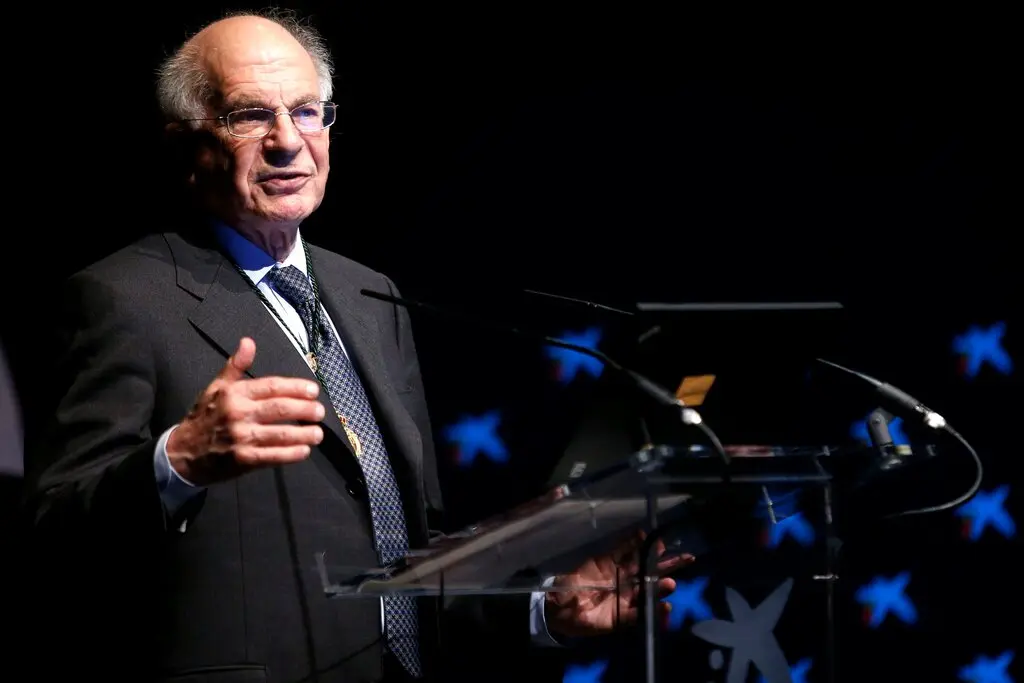
PHOTO SOURCE: Keith Meyers – The New York Times
Daniel Kahneman and Behavioural Economics: Lessons for Leadership Development
Daniel Kahneman, a psychologist who pioneered theories in behavioural economics that heavily influenced the discipline and won him a Nobel prize, died at the age of 90.
Kahneman, perhaps whose most significant and bestselling book Thinking, Fast and Slow, argued against the notion that people’s behaviour is rooted in a rational decision-making process—instead, it is often based on instinct.
Unlike traditional economics, which assumes that human beings generally act rationally and that exceptions tend to disappear as the stakes are raised, the behavioural school is based on exposing hard-wired mental biases that can warp judgement, often with counterintuitive results.
Kahneman’s work has profoundly impacted leadership development. He brings insights from psychology, particularly cognitive biases and decision-making, into leadership practices and training. His research into heuristics and biases reveals how people often rely on intuitive judgments rather than rational analysis, leading to systematic errors in decision-making. Awareness and understanding of this are critical to a leader’s development.
At Kaleidoskope, we reference Kahneman’s work in our leadership development learning journeys in many aspects:
- Understanding Cognitive Biases in our
Building An Inclusive Workplace Workshop
Kahneman’s identification of cognitive biases like anchoring, availability heuristic, and overconfidence effect has helped leaders understand the pitfalls in decision-making processes. By recognizing these biases, leaders can develop strategies to mitigate their impact, leading to more rational and effective decision-making. - Decision-Making Under Uncertainty in our
Change Management and Change Agility Programme
Kahneman’s work on prospect theory highlights how people make decisions under risk and uncertainty, often valuing losses more than gains. This understanding is critical in our VUCA world, especially when leaders must make quick decisions under pressure. It helps leaders in risk assessment and management, encouraging them to consider how fear of loss might influence their decision-making and to develop strategies that balance risk and reward more effectively. - Improving Judgment and Decision-Making in our
Critical Thinking for Better Decision-Making Workshop
Kahneman’s idea of System 1 and System 2 thinking—where System 1 is fast, intuitive, and emotional, and System 2 is slower, more deliberative, and more logical—has been incorporated into leadership development programs. This model helps leaders understand when they might rely too heavily on intuition and when a more analytical approach is warranted. - Negotiation and Influence in our
Influencing Without Authority and Win-Win Negotiations workshops
Kahneman’s insights into how people value gains and losses can be applied in negotiation settings, helping leaders develop strategies that consider the psychological biases of all parties involved. It can lead to more successful negotiations and positive outcomes for all involved. - Enhancing Emotional Intelligence in our
Emotional Intelligence for Leaders and Mindfulness at Work workshops
Kahneman’s exploration of decision-making’s cognitive and emotional aspects supports the development of emotional intelligence in leadership. By becoming more aware of their biases and heuristics, leaders can better understand and manage their emotions and those of their team members. - Strategic Planning and Visioning in our
Strategic Thinking for Leaders Programme
Understanding cognitive biases and decision-making processes can help leaders in strategic planning and visioning exercises. They can anticipate potential pitfalls in their planning processes and develop more robust strategies for cognitive biases.
Kahneman’s Legacy
Kahneman’s groundbreaking work has revolutionised the way we think about leadership. By delving into the depths of psychology, especially cognitive biases and how we make decisions, he’s shown us the invisible ropes that guide our thinking. His studies on heuristics and biases uncover a startling truth: we lean more on gut feelings than on logical reasoning, paving the way for mistakes in our decision-making processes.
At Kaleidoskope, Kahneman’s insights are woven into the fabric of our leadership development programs. We explore various facets of his research, enlightening leaders on how to navigate their intuitive judgments and sharpen their decision-making skills. For this, we are eternally grateful.
Related Blogs
Leadership Lessons from F1: Collaboration Under Pressure
What can Formula 1 teach leaders about collaboration under pressure? This article explores lessons in cross-functional teamwork, accountability, adaptability, and team dynamics from the 2026 race at Sepang.

Managing Up: A Guide for First-Time Managers
Managing up is a critical skill for first-time managers, yet it is rarely taught. Learn how to understand your manager’s priorities, adapt to different working styles, and build a clear communication routine that strengthens trust and confidence.
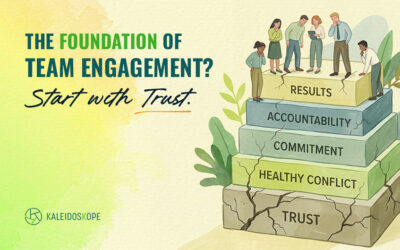
The Foundation of Team Engagement? Start with Trust.
Strong team engagement starts with trust. Explore how healthy conflict, commitment, accountability and shared goals create the foundation for stronger team performance.