
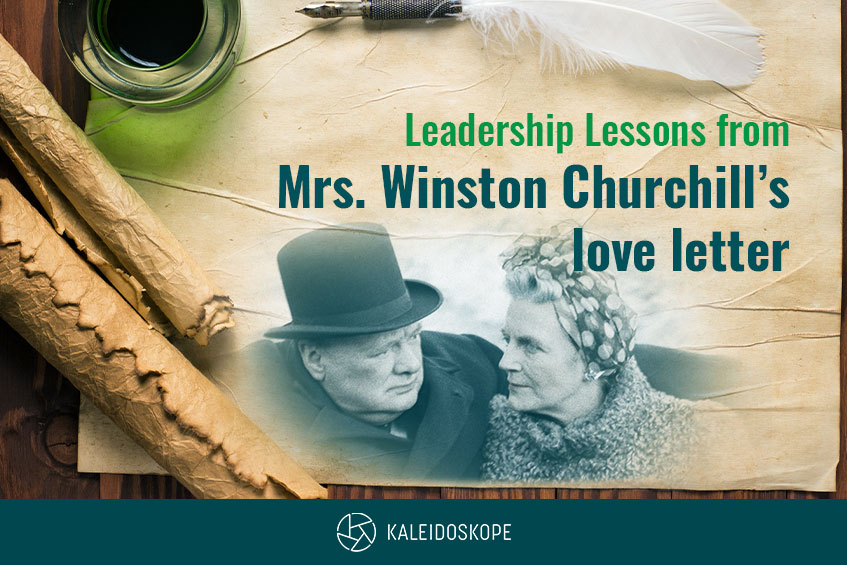
Leadership Lessons From Mrs Winston Churchill’s Love Letter To Her Husband
It was the year 1940 and by the end of June, France had fallen to defeat. The British army had been evacuated from the continent. A German invasion was imminent, and Winston was under immense pressure. His wife, Clementine, recognised how the stress was affecting her husband. And so an alarmed Mrs Churchill wrote to her husband — the only known correspondence between them in 1940.
Here’s an excerpt:[1]
One of the men in your entourage (a devoted friend) has been to me and told me that there is a danger of your being generally disliked by your colleagues and subordinates because of your rough, sarcastic, and overbearing manner. It seems your Private Secretaries have agreed to behave like schoolboys and “take what’s coming to them” and then escape out of your presence shrugging their shoulders.
My Darling Winston I must confess that I have noticed a deterioration in your manner; and you are not so kind as you used to be.
It is for you to give the Orders, and if they are bungled—except for the King, the Archbishop of Canterbury, and the Speaker—you can sack anyone and everyone.
Therefore with this terrific power you must combine urbanity, kindness, and—if possible—Olympic calm.
Besides you won’t get the best results by irascibility and rudeness. They will breed either dislike or a slave mentality.
Please forgive your loving, devoted, and watchful
Clemmie
There is no known response to this letter. However, the Churchhills’ daughter Mary speculated that it was likely that her parents talked about it, and Mr Churchill must have taken it to heart. Mary said that her father “could undoubtedly be formidable and unreasonable; many of the people who served him on levels in those dire years have put on record not only their admiration for him as a chief but also their love for a warm and endearing human being.”
The event may have occurred more than 80 years ago in a very different environment and time. Still, we can learn valuable lessons in team leadership from this very simple and touching admonishment.
Psychological safety is a term used to describe the shared belief that a team or organisation is a safe space for taking risks, speaking up, and expressing oneself without fear of negative consequences. It is essential for creating a positive work environment where employees feel comfortable being themselves, sharing their ideas, and collaborating effectively.
As leaders, developing and nurturing an environment of psychological safety has become even more critical in the current work environment. At Kaleidoskope we are offering a leadership programme to help your teams and managers apply the practices of psychological safety and effectively mitigating the detrimental effects of a fear-driven culture. With our many years of combined industry expertise in learning and development, we are confident to offer pragmatic, holistic programs tailored to your business needs.
SOURCES:
[1] International Churchill Society
Related Blogs

Leadership Lessons from F1: Collaboration Under Pressure
What can Formula 1 teach leaders about collaboration under pressure? This article explores lessons in cross-functional teamwork, accountability, adaptability, and team dynamics from the 2026 race at Sepang.

Managing Up: A Guide for First-Time Managers
Managing up is a critical skill for first-time managers, yet it is rarely taught. Learn how to understand your manager’s priorities, adapt to different working styles, and build a clear communication routine that strengthens trust and confidence.

The Foundation of Team Engagement? Start with Trust.
Strong team engagement starts with trust. Explore how healthy conflict, commitment, accountability and shared goals create the foundation for stronger team performance.