
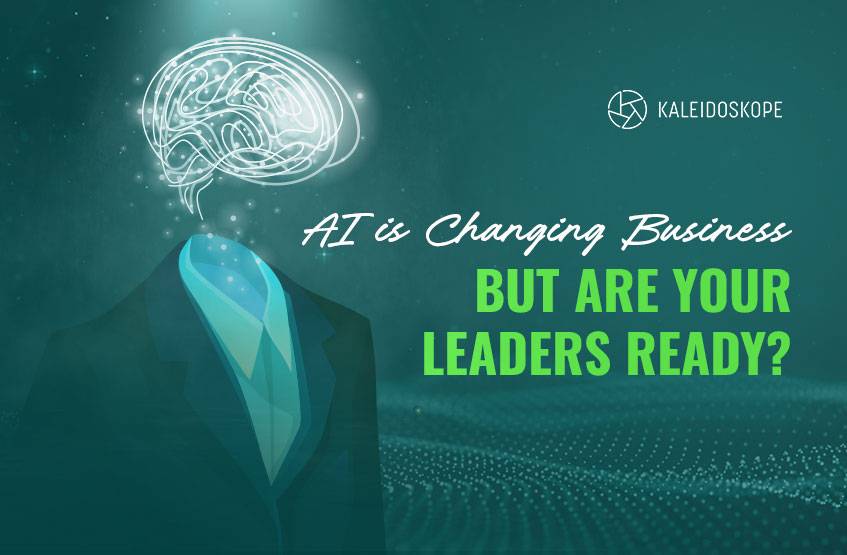
AI Is Changing Business: Are Your Leaders Ready?
“Working with leaders embracing AI, I see too many fall into the ‘AI Innovation Trap’: charging ahead without navigating the ethical minefields beneath. When ethics become an afterthought, you’re not innovating but automating your worst biases at scale. That’s why I challenge teams: Resist deployment pressure. Pause. Interrogate yourself, teams and AI vendors with the hard questions first. Because being first to market means nothing if you’re first to fail ethically. Let’s build AI that earns trust. It’s the only future worth creating.”
Gurpreet Bajaj Singh (GP),
Master Trainer and Facilitator at Kaleidoskope
In boardrooms around the world, artificial intelligence (AI) is no longer a hypothetical concept. It’s here—streamlining operations, accelerating insights, and transforming the way we engage with customers and employees. This seismic shift marks a new frontier for AI in business, promising unprecedented efficiency and innovation. But amid this excitement lies a sobering reality: AI is only as good—or as dangerous—as the values that guide it.
From hiring algorithms to performance scoring systems, AI is making decisions that affect people’s lives. These are not minor operational tweaks; they are profound interventions in the human experience of work. And yet, many organisations are charging ahead with implementation before asking the most important questions about AI ethics:
- Is the data fair and representative?
- Can we explain how our algorithms make decisions?
- Who is accountable when AI goes wrong?
These aren’t just technical questions. They’re leadership questions. And the answers are shaping the future of work, trust, and organisational culture.
Beyond the Hype: Why Ethical Leadership Matters in an AI World
The temptation to embrace AI at speed is strong. Who doesn’t want faster decisions, better predictions, or hyper-personalised experiences? The competitive pressure to be at the forefront of AI in business can feel all-consuming.
But as AI becomes more embedded in business processes, leaders must confront an emerging truth: speed without ethics is a risk multiplier. Unchecked AI can replicate historical biases, damage trust with employees and customers, and expose organisations to regulatory and reputational fallout. A flawed algorithm doesn’t just make a mistake; it makes thousands of them in seconds, amplifying prejudice on an industrial scale. This is where the conversation about AI ethics moves from theoretical to critical.
Conversely, when applied responsibly, AI becomes a strategic advantage—enhancing fairness, transparency, and human decision-making. That’s where ethical leadership comes in. Leaders must understand AI not just as a tool, but as a force that can shift power, amplify inequities, and fundamentally reshape organisational culture. It requires a leadership cohort that is fluent not only in the language of technology but also in the language of morality and accountability. True innovation in AI in business is not just about what we can build, but what we should build.
Decoding AI Ethics in Business: A Leadership Dialogue for the Future
To help organisations navigate this complex space, we’ve designed a high-impact, interactive session:
Leader Talk Series – Decoding AI and Ethics in Business
This isn’t a technical workshop. It’s a mindset reset. We invite leaders to step into real-world scenarios, challenge their assumptions, and reflect on the values driving their organisation’s use of AI. Our goal is to cultivate a culture of ethical leadership that is robust enough to handle the challenges posed by modern AI in business.
The session is built around three key pillars:
- Understanding the Ethical Risks
Using live case studies, we explore how even well-intended AI can go off course. Think biased hiring tools, opaque customer profiling, and feedback loops that reinforce inequality. These examples serve as cautionary tales—and springboards for critical discussion. We delve into headlines and behind-the-scenes failures, translating abstract risks into tangible business consequences. This pillar is foundational to grasping the real-world implications of AI ethics.
- Building Ethical Awareness Through Experience
Participants don’t just learn about ethics—they feel the tension. Through ethical maze simulations and scenario-based decision-making challenges, leaders experience firsthand the grey areas where business goals collide with ethical dilemmas. This hands-on, experiential learning opens powerful conversations about responsibility, values, and long-term consequences. It forces a confrontation with ambiguity, training leaders to develop the moral muscle needed for effective ethical leadership in the age of AI.
- Creating a Culture of Accountability and Trust
Using reflection tools and group insights, we help participants assess their organisation’s AI readiness and identify cultural blind spots. More importantly, we equip them with the confidence to challenge questionable practices, ask better questions, and model transparent, values-led leadership in the age of automation. This final pillar moves from awareness to action, providing a framework for embedding AI ethics into the very fabric of the company culture.
The Future Belongs to Conscious Leaders
AI can drive efficiency. But only ethical leadership can ensure that it drives equity. Leaders must not only understand AI—they must be prepared to question it. They must be the voices that ask:
- Is this fair?
- Is this explainable?
- Who benefits, and who is potentially harmed?
As more decisions become automated, leadership becomes less about having the answers and more about asking the right questions. This is the new mandate for leaders overseeing the integration of AI in business. The greatest risk isn’t a technical glitch; it’s a failure of moral imagination.
“Decoding AI and Ethics in Business” is an invitation to start those conversations now—before AI outpaces your culture.
Interested in bringing this session to your organisation?
Let’s build leadership cultures that are not only tech-enabled, but human-centred, values-led, and future-ready.
Related Blogs
Leadership Lessons from F1: Collaboration Under Pressure
What can Formula 1 teach leaders about collaboration under pressure? This article explores lessons in cross-functional teamwork, accountability, adaptability, and team dynamics from the 2026 race at Sepang.

Managing Up: A Guide for First-Time Managers
Managing up is a critical skill for first-time managers, yet it is rarely taught. Learn how to understand your manager’s priorities, adapt to different working styles, and build a clear communication routine that strengthens trust and confidence.
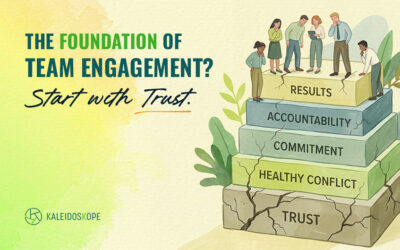
The Foundation of Team Engagement? Start with Trust.
Strong team engagement starts with trust. Explore how healthy conflict, commitment, accountability and shared goals create the foundation for stronger team performance.