
They Never Won a Medal—But They’re the Most Resilient Team at the Winter Olympics
By Hwee Ching Ho
Director, Kaleidoskope Pte Ltd
When we think about resilience at the Milan-Cortina Winter Olympics, we think about athletes.
We picture Ilia Malinin, the “Quad God”, standing still at the end of the rink before launching into another quadruple jump.
We remember Alysa Liu, skating with composure beyond her years, performing with freedom rather than fear.
We see Eileen Gu at the lip of the halfpipe, committing fully to amplitude and rotation.
We recall the United States women’s national ice hockey team forcing overtime in a gold medal final — holding structure when fatigue could easily have fractured belief.
These are the moments that dominate the replays. The jump that lands. The trick that sticks. The goal that seals the win.
Visible resilience. Dramatic. Concentrated. Measurable.
But that’s only one layer of resilience at the Games.
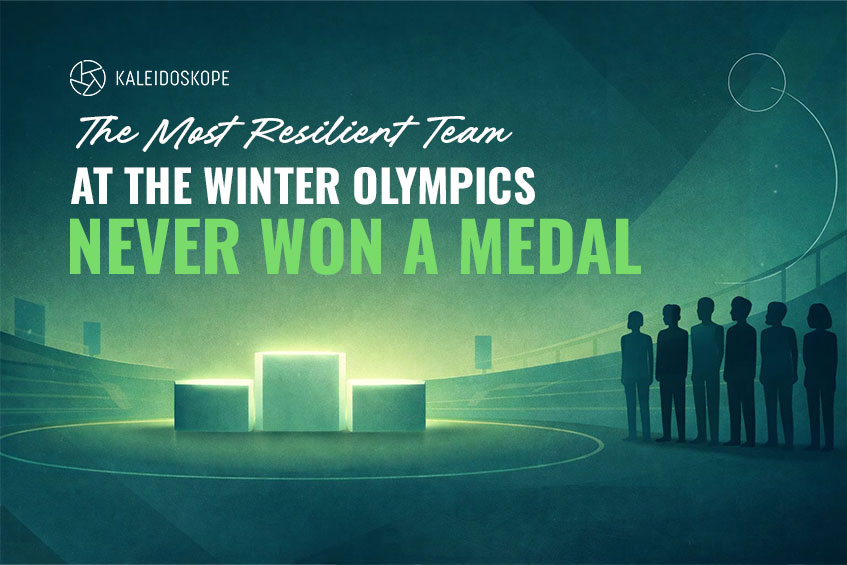
The Team Without a Podium
Behind every performance in Milan-Cortina stood another team.
Thousands of volunteers — moving quietly between venues, transport routes and accreditation desks. Adjusting when weather shifted schedules. Redirecting spectators when access points changed. Calming athletes when equipment was delayed.
They did not wear bibs. They did not chase times.
But when friction appeared, they absorbed it. When confusion rose, they steadied it. When plans shifted, they recalibrated.
The Games looked seamless because someone was constantly smoothing the edges.
That is team resilience most organisations rarely notice. It is not spectacular. It does not trend on social media. It does not receive medals.
But without it, performance collapses.
Resilience Is Not Only Heroic — It Is Structural
In corporate life, we often equate resilience with toughness. Employees are encouraged to push harder, work longer, and deliver under pressure.
But the Olympic volunteers demonstrate something different.
Resilience is not brute endurance. It is system integrity under strain.
What does this mean? It is the ability of a team to maintain stability when volatility increases.
Every organisation has its equivalent of Olympic volunteers. They are not in the spotlight. But they prevent collapse. They hold processes together during change. They absorb last-minute pivots. They translate strategy into operational reality.
When transformation accelerates, markets fluctuate, or growth stretches capacity, these system stabilisers carry disproportionate strain.
But if they are unsupported, resilience in the workplace quietly erodes.
Not in one dramatic failure, rather in fatigue, disengagement, or brittleness.
This is why building resilient teams is not optional in today’s environment. It is foundational to sustainable performance.
High performance culture cannot be built solely on star performers. It must be built on structural steadiness — on teams that can flex without fracturing.
What Milan-Cortina Demonstrates About Resilience
The Winter Olympics show us two kinds of resilience: The visible kind — athletes landing impossible jumps under scrutiny. And the invisible kind — people ensuring the conditions remain playable.
High performance is inspiring, to be sure. But sustainable performance depends on structure.
The question for leaders is not only: Who are our stars?
Rather, it is: Who is holding the system steady? Are we building resilience into the fabric of the team not just into individuals?
Because resilience in the workplace is rarely about heroic recovery. It is about everyday reliability. It’s about:
- Clear roles when pressure spikes.
- Psychological safety so concerns surface early before they metastasise into crises.
- Communication habits that prevent fragmentation when tension rises.
When those foundations are absent, even talented teams become brittle. When they are present, teams can absorb volatility without losing cohesion.
Resilience as Design, Not Accident
Too often, organisations assume resilience will emerge organically. As such, they hire capable people. They set ambitious targets. They reward results.
And they hope resilience will follow.
But hope is not a strategy.
Team resilience is built deliberately. It is cultivated through clarity, structure, and shared norms that hold under stress.
At Kaleidoskope, we work with organisations to strengthen resilience at the collective level — not by pushing people to “be tougher”, but by equipping teams to:
- Clarify roles and decision-making under pressure.
- Build psychological safety so tension is surfaced early.
- Develop communication habits that prevent fragmentation.
- Strengthen alignment so execution remains coherent even when plans shift.
This is how building resilient teams moves from rhetoric to reality.
Resilience becomes embedded in how meetings are run, how decisions are made, and how disagreements are handled.
Over time, this shapes a high performance culture that is both ambitious and humane.
One that protects team wellbeing while sustaining results.
The Measure of Endurance
Olympic medals measure moments, while organisational resilience measures endurance.
It measures whether your team can sustain clarity through a volatile quarter. Whether collaboration survives a restructuring. Whether morale holds through uncertainty.
Often, the most resilient teams are the ones no one sees — until the system is tested.
The question is whether yours was built by accident.
Or by design.
If you’re looking to move beyond surface-level resilience — beyond motivational slogans and reactive firefighting — and instead build a culture where resilience is embedded into how your teams communicate, decide, and adapt, we’d welcome a conversation.
If you are ready to build resilient teams intentionally, we’d love to explore how this journey can be tailored for your organisation. Speak to us today about building your team resilience.
Related Blogs
Leadership Lessons from F1: Collaboration Under Pressure
What can Formula 1 teach leaders about collaboration under pressure? This article explores lessons in cross-functional teamwork, accountability, adaptability, and team dynamics from the 2026 race at Sepang.

Managing Up: A Guide for First-Time Managers
Managing up is a critical skill for first-time managers, yet it is rarely taught. Learn how to understand your manager’s priorities, adapt to different working styles, and build a clear communication routine that strengthens trust and confidence.
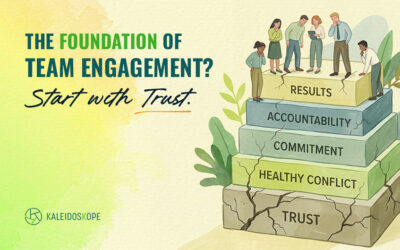
The Foundation of Team Engagement? Start with Trust.
Strong team engagement starts with trust. Explore how healthy conflict, commitment, accountability and shared goals create the foundation for stronger team performance.