
Leadership Lessons from F1: How Cross-Functional Collaboration Works Under Pressure
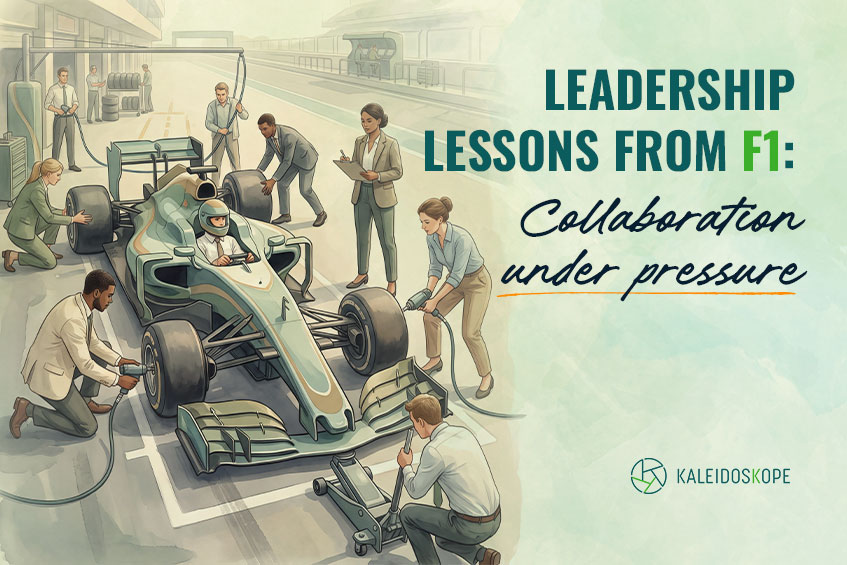
What the 2026 Bahrain Grand Prix in Malaysia teaches us about cross functional collaboration, team dynamics and leading through change.
By Hwee Ching Ho
Director, Kaleidoskope Pte Ltd
We’ve just crossed the finish line of a gruelling Formula 1 triple-header from Azerbaijan to Malaysia to Singapore, three weeks that left us breathless, and not just from the haze (no apologies for the puns!).
The most electrifying weekend almost didn’t happen. When the 2026 Bahrain Grand Prix could not proceed as planned due to regional geopolitical conflicts, F1 and its partners settled on what felt like a no-brainer: relocating the race to Malaysia’s Sepang International Circuit. Grade 1-certified and race-ready, Sepang could slot in between Azerbaijan and Singapore.
In retrospect, the word “easily” is doing the heavy lifting here. Pulling off a multi-million-dollar global spectacle in just over two months was an administrative Everest, and a raw blueprint for uniting disparate entities when failure is not an option.
For business leaders, the experience offers valuable lessons in cross functional collaboration, particularly when different teams, cultures and priorities must come together under immense pressure.
The Illusion of Seamless Partnership
We talk about synergy and alignment as if they happen organically once a slide deck is approved. Real cross-border collaboration is messy: opposing time zones, conflicting regulations, disparate standards and entrenched local cultures.
It’s like asking two engineering teams who speak different languages to build a gearbox overnight, much like sales, marketing, technical and delivery teams wrestling for alignment.
Executives focus on the vision; project managers, logistics partners and ground staff grapple with freight manifests, crowd management and circuit requirements. If a leader’s gaze stays locked only on the finish line, they risk trampling the very people carrying the weight of the team.
This is where team dynamics become critical. Different functions may share the same overarching objective, but each sees the challenge through a different lens. What appears straightforward from a strategic standpoint may be operationally unworkable for the people responsible for delivery.
And this raises an important question: why is cross functional collaboration important?
Because no single department, however capable, has all the knowledge, resources or perspectives needed to deliver complex outcomes. Effective collaboration allows teams to anticipate challenges, share expertise and make better decisions together.
But this doesn’t happen through goodwill alone. It requires leaders to actively develop collaboration skills, establish clear communication channels and create an environment where people feel safe raising difficult issues before they become serious problems.
Empathy on the Ground
Bahrain’s 22-year desert-circuit expertise and Malaysia’s tropical motorsport heritage had to merge, not collide.
Instead, Day 1 saw spectators struggling to leave Sepang amid lengthy shuttle bus queues, traffic congestion, poor signage and confusing crowd management. Some spectators reportedly took between three and six hours to complete their journeys, while others walked several kilometres in search of transport.
Sepang has experience managing crowds exceeding 100,000, while Bahrain’s peak is 37,000. Yet the opening day’s arrangements struggled to cope with the demands of the event.
By Days 2 and 3, transport operators, circuit management and local authorities had stepped up coordination, improved passenger flows and adjusted traffic arrangements following the complaints.
So what went wrong at the start? And could greater attention to local operational realities have helped prevent the chaos?
The lesson is active situational awareness.
When your team on the ground warns that a turnaround will break local processes or burn out staff, dismissing it as resistance to change can be disastrous. True leaders ask: “What do you need from my level to clear this roadblock?” rather than “Why can’t this be done like before?”
Anchoring on a Shared North Star
The bottlenecks should not have happened; structural stress-testing cannot be bypassed, no matter how tight the schedule.
From Day 2, organisers and transport partners responded to fan and staff grievances, reviewed traffic arrangements and improved exit flows, absorbing harsh feedback and moving forward decisively.
Every briefing and escalation must tie back to one North Star: the show must go on both brilliantly and safely.
When people understand why, they stop protecting their turf and start protecting each other.
The same principle applies to organisations navigating complex projects or leadership through change. When each department concentrates solely on its own targets, even competent teams can pull in different directions.
High performing teams must learn to reconcile these tensions rather than allow them to deepen organisational silos.
The Takeaway for Leaders: Building High Performing Teams
Formula 1 may operate at extraordinary speed, but the underlying leadership challenges are familiar to organisations everywhere.
Five lessons stand out:
- Unite Through Purpose
Use a clear, high-stakes common goal to dissolve silos and forge trust under fire.
- Acknowledge the Friction
Build structures that anticipate and absorb cultural and operational clashes.
- Consolidate Ownership
Without a single accountable owner and clear roles, accountability dissolves.
- Realign Performance Metrics
Bring siloed measurements and incentives into a single scorecard.
- Respond and Adjust to On-ground Reality
Keep your eye on the vision and your ears on the teams executing on the ground.
These practices are especially important when working under pressure, when time is limited and the instinct to retreat into familiar ways of operating becomes strongest.
Ultimately, building high performing teams means creating the conditions for people with different expertise to contribute fully, even when the pressure is mounting.
In leadership, as in F1, you don’t win races by avoiding tight corners; you win them by steering through the chaos together.
And perhaps the most important question for leaders is this: when your team encounters its next tight corner, will everyone be steering in the same direction?
At Kaleidoskope, we work with leaders and organisations to strengthen team dynamics, develop collaboration skills and build the trust and accountability needed to navigate complexity together.
Related Blogs

Managing Up: A Guide for First-Time Managers
Managing up is a critical skill for first-time managers, yet it is rarely taught. Learn how to understand your manager’s priorities, adapt to different working styles, and build a clear communication routine that strengthens trust and confidence.
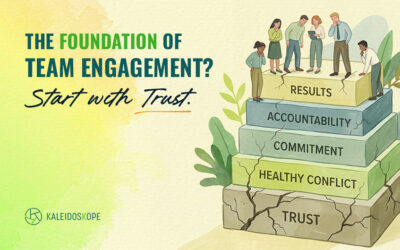
The Foundation of Team Engagement? Start with Trust.
Strong team engagement starts with trust. Explore how healthy conflict, commitment, accountability and shared goals create the foundation for stronger team performance.

Invert, Always Invert: How to Rethink Failure and Work Backwards
What if the best way to build a stronger team is to ask what would destroy it? This article applies Charlie Munger’s inversion mental model to trust, conflict and the foundations of effective teamwork.