
Leadership Lessons from F1: How Cross-Functional Collaboration Works Under Pressure
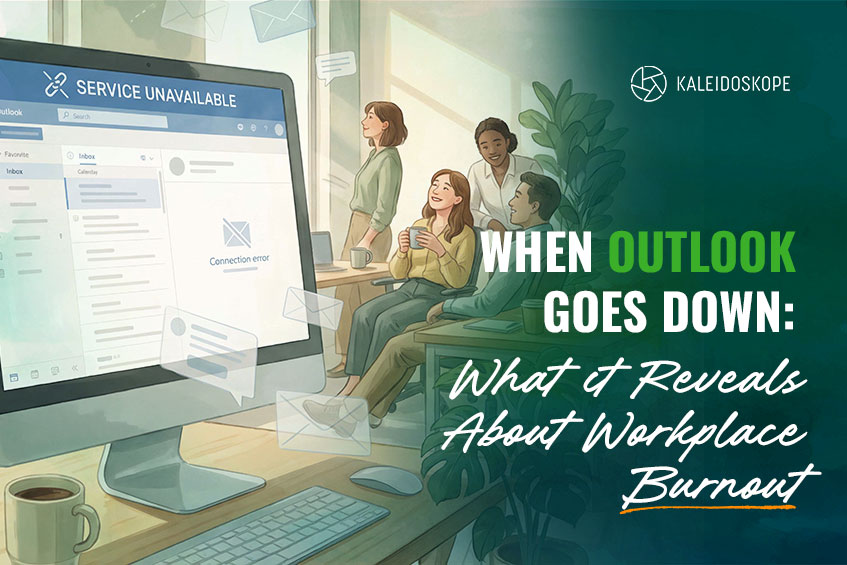
Some musings on why so many of us quietly welcomed the break.
By Hwee Ching Ho
Director, Kaleidoskope Pte Ltd
Friday morning. I was getting my coffee and settling in to work when my WhatsApp pinged. It was my husband, letting me know that Microsoft was down.
My first reaction was relief, to be honest. And a little bit of happiness. Then came a chuckle.
Imagine the team at Microsoft needing an urgent meeting to discuss the outage, only to discover they couldn’t use Outlook to schedule it. So they turn to Copilot for help, only to realise that’s down too.
Somewhere, someone must have suggested, “Why don’t we just walk over and talk to each other?”
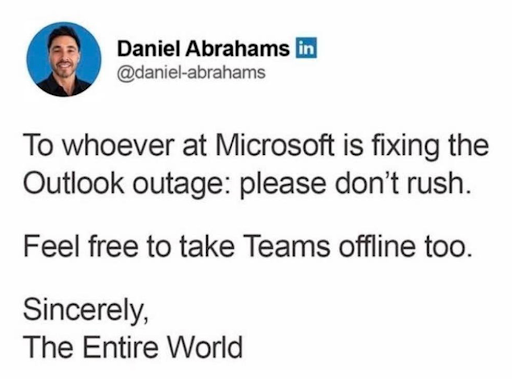
Naturally, I turned to social media and spent the next hour reading the memes and posts like this one:
What really caught my attention, though, was that I wasn’t the only one feeling relieved. Very few people seemed to be panicking. Most appeared to be enjoying the unexpected breather: a longer coffee, a proper lunch, a few precious hours without anything pinging.
Which got me thinking: what does that say about our relationship with work?
If a few hours without Outlook feels like a holiday, perhaps it’s telling us something about workplace burnout and just how many of us are running on empty.
Our days are filled with back-to-back meetings, email threads that could have been five-minute conversations, the dreaded “reply all” that nobody asked for, and that unspoken expectation to respond immediately, simply because everyone else does.
Somewhere along the way, being constantly available has become part of what we consider a normal working day. We check emails between meetings, reply to messages during lunch, and sometimes feel guilty about taking a moment to ourselves.
None of this happens overnight. It builds up gradually, until one day it simply becomes “the way we work here”.
But does it have to be?
Perhaps the real lesson from the outage has less to do with technology and more to do with how we’ve allowed it to shape our working lives.
Do we really need another meeting? Could that email wait? And when was the last time we had a proper conversation with a colleague without a screen between us?
Maybe it’s time to rethink some of these habits. We could embrace more asynchronous (async) communication, where every message doesn’t demand an immediate reply and people have room to focus without constant interruptions. Or revisit something as basic as how to run an effective meeting, including recognising when a quick conversation would do.
At Kaleidoskope, we work closely with leaders and teams to help them rethink these everyday habits and win back some of that precious time. Whether it’s protecting space for focused work, running more effective meetings, or simply agreeing on healthier ways to communicate and collaborate, small changes can make a real difference.
After all, finding joy in work shouldn’t depend on our email servers taking an unexpected break.
And the best part? We don’t need Microsoft to go down to make these changes happen.
If any of this sounds familiar, we’d love to have a conversation.
Related Blogs

Leadership Lessons from F1: Collaboration Under Pressure
What can Formula 1 teach leaders about collaboration under pressure? This article explores lessons in cross-functional teamwork, accountability, adaptability, and team dynamics from the 2026 race at Sepang.

Managing Up: A Guide for First-Time Managers
Managing up is a critical skill for first-time managers, yet it is rarely taught. Learn how to understand your manager’s priorities, adapt to different working styles, and build a clear communication routine that strengthens trust and confidence.
The Foundation of Team Engagement? Start with Trust.
Strong team engagement starts with trust. Explore how healthy conflict, commitment, accountability and shared goals create the foundation for stronger team performance.